Curriculum
A curriculum that follows the child
Our program blends Montessori structure with Reggio Emilia-inspired inquiry across ten connected areas of learning.
01
Montessori-Inspired Learning
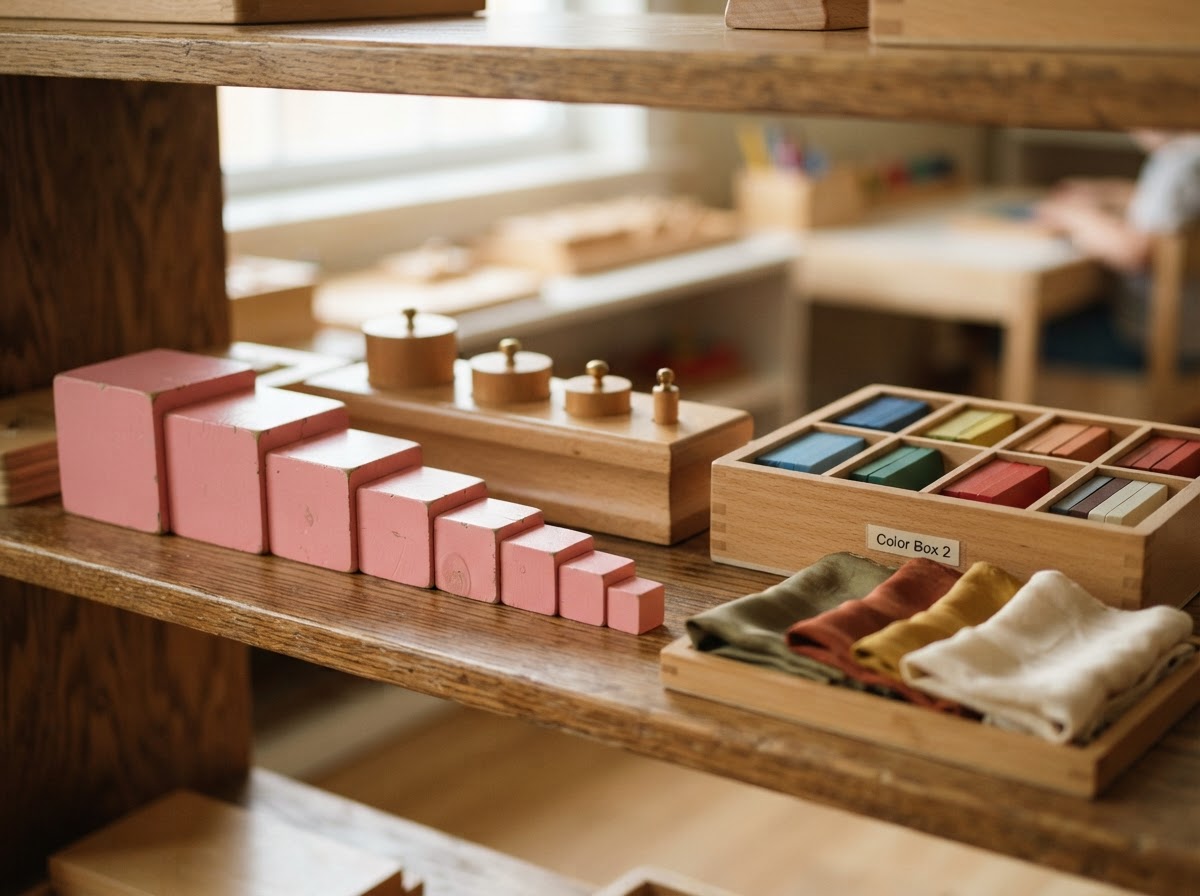
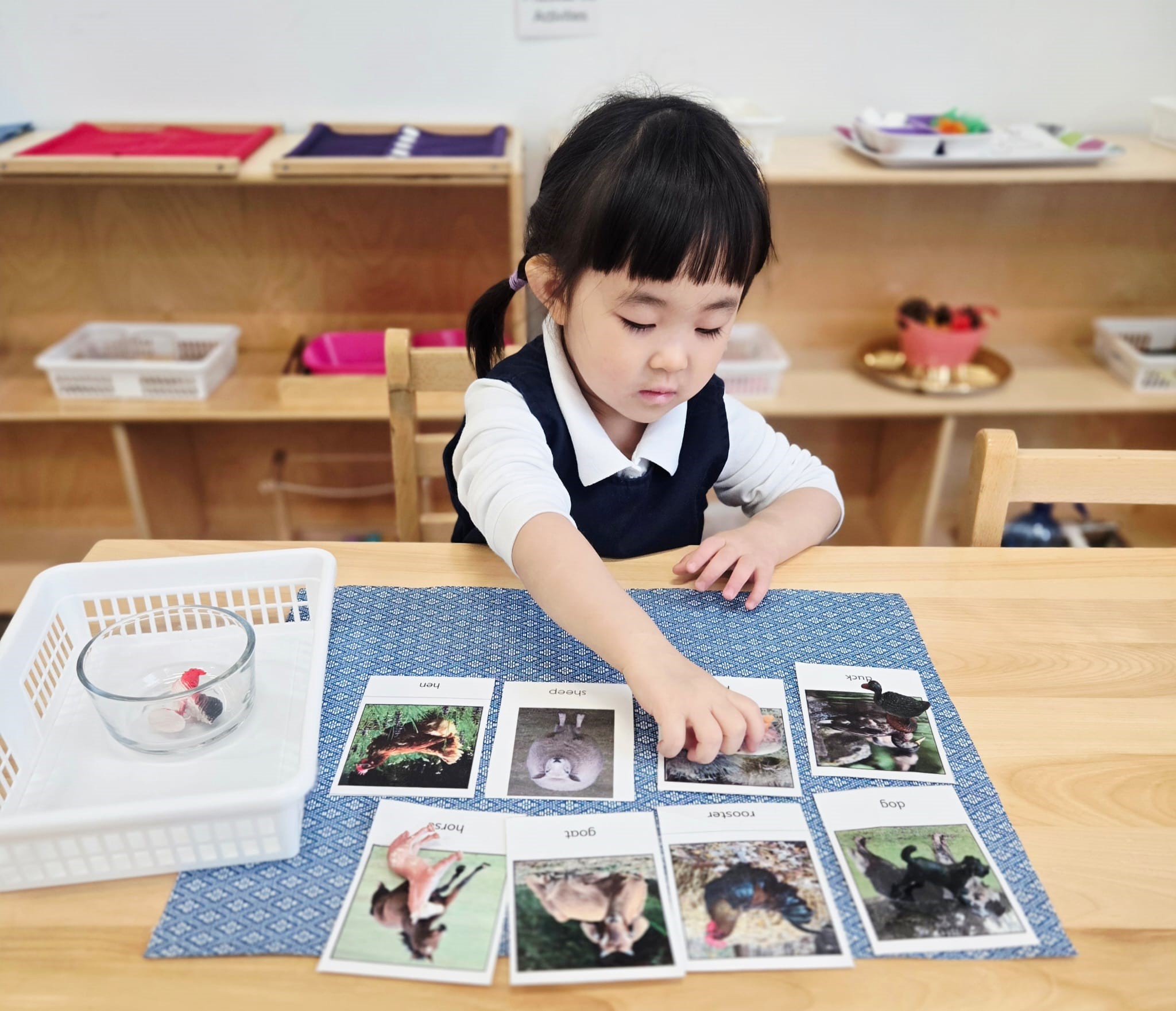
The prepared environment is at the heart of our classrooms. Materials are arranged on open, child-height shelves in a deliberate order, so children can choose their own work, carry it to a mat or table, use it fully and return it. Each material isolates one concept and contains its own control of error, which allows children to correct themselves without an adult stepping in. Uninterrupted work periods protect concentration, and mixed-age grouping lets younger children learn from older ones. Above all, we follow the child — respecting the pace at which each individual develops.
02
Reggio Emilia Inspiration
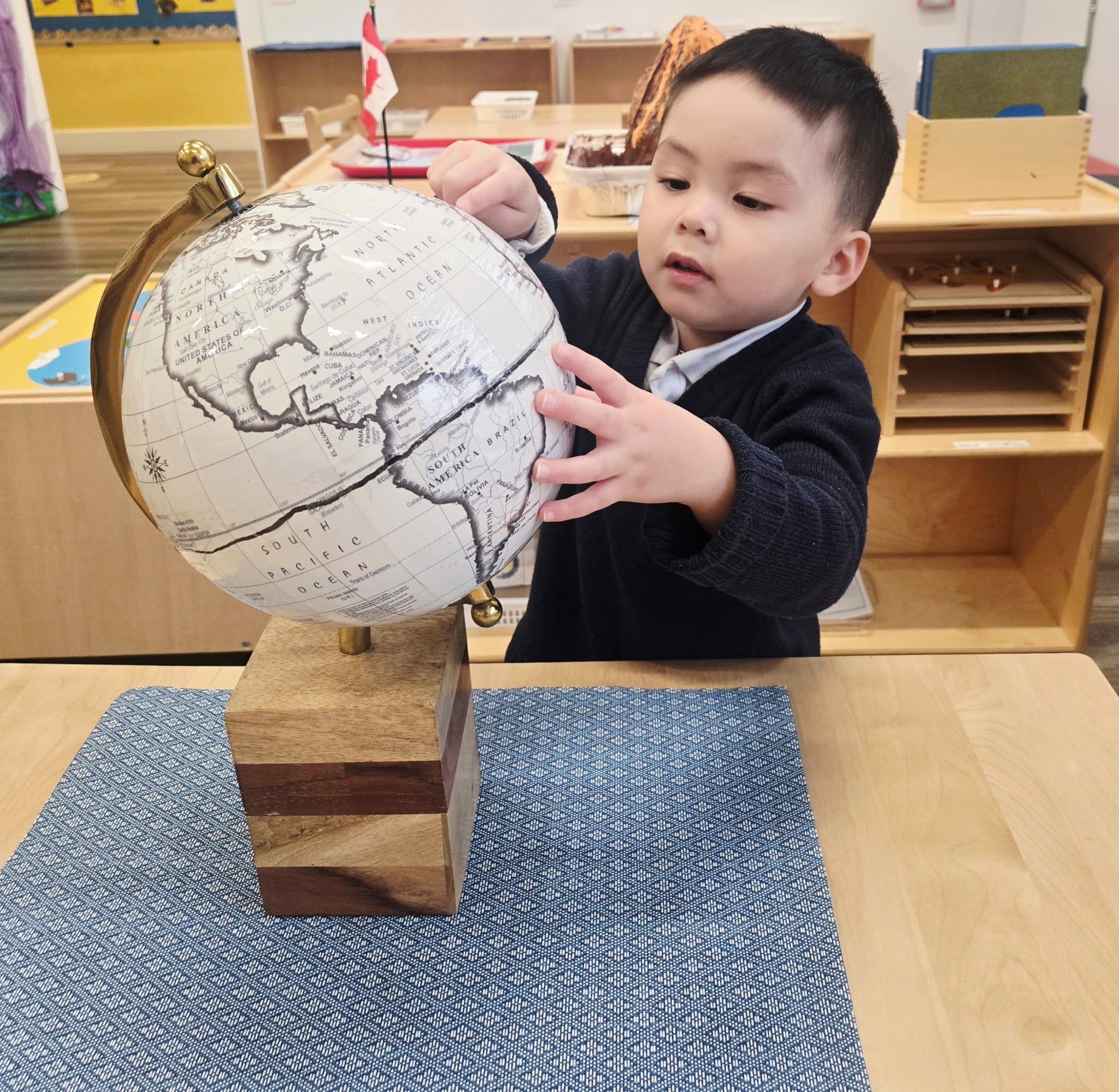
Alongside Montessori practice, we draw on the Reggio Emilia approach, viewing children as capable researchers whose questions are worth following. Projects grow from what children notice — a nest outside the window, a changing shadow or a puddle that keeps returning. Educators extend this curiosity through thoughtfully prepared provocations: inviting arrangements of materials, objects, questions and experiences that spark wonder and encourage children to investigate, develop and test their own ideas. Rather than leading children toward a predetermined outcome, these experiences open possibilities for deeper exploration. Photographs, conversations and displayed work make children’s thinking visible, while collaboration and a beautiful, flexible environment — considered the third teacher — support discovery at every step.
03
Practical Life
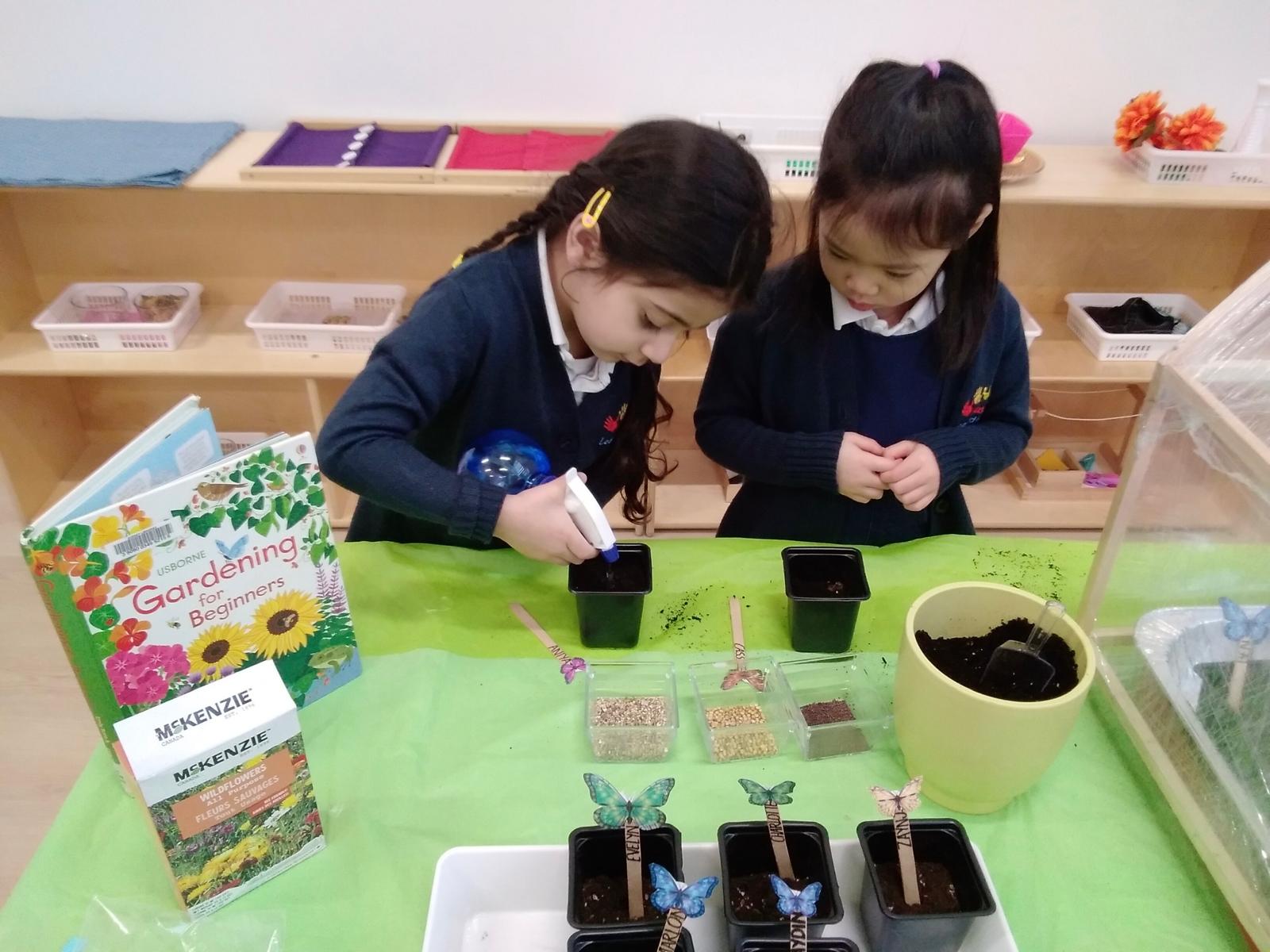
Pouring, spooning, sweeping, buttoning, table washing, food preparation and caring for plants — practical life work builds fine motor coordination, sequencing, concentration and genuine independence. Children learn to do things for themselves and for their classroom community, and with that comes real responsibility and a quiet sense of pride.
04
Sensorial Learning
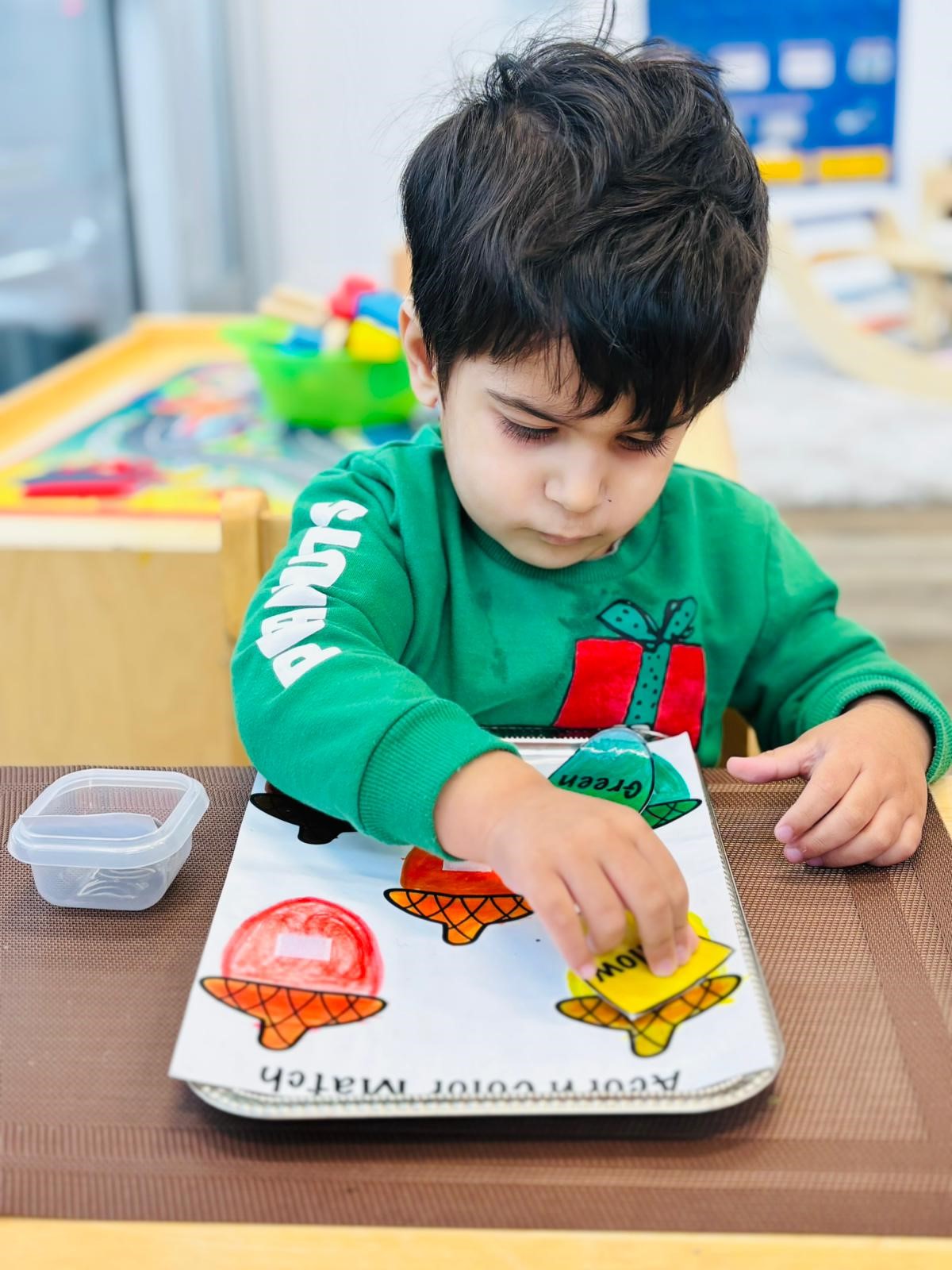
Sensorial materials refine the senses and give children precise language for what they perceive: size, shape, dimension, colour, texture, weight, sound and temperature. By grading, matching and sorting, children build the classification skills that later support mathematics, geometry and scientific observation.
05
Language and Literacy
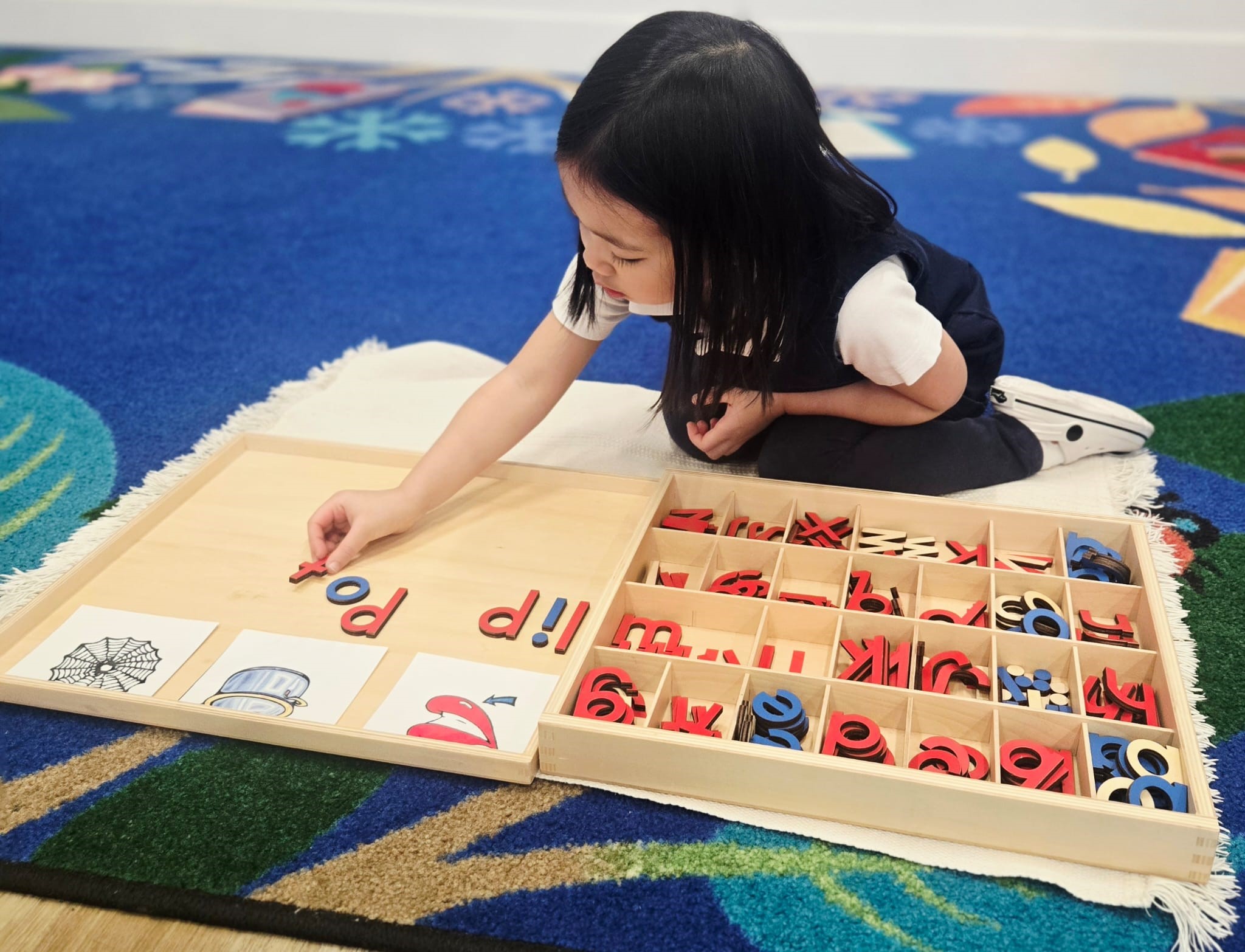
Rich conversation, storytelling, songs and rhymes come first. From there children move to phonemic awareness, sandpaper letters, the movable alphabet, early writing and reading. Vocabulary is built through real objects and real experiences, and books are treated as treasured company — read aloud daily, revisited often and available on every shelf.
06
Mathematics
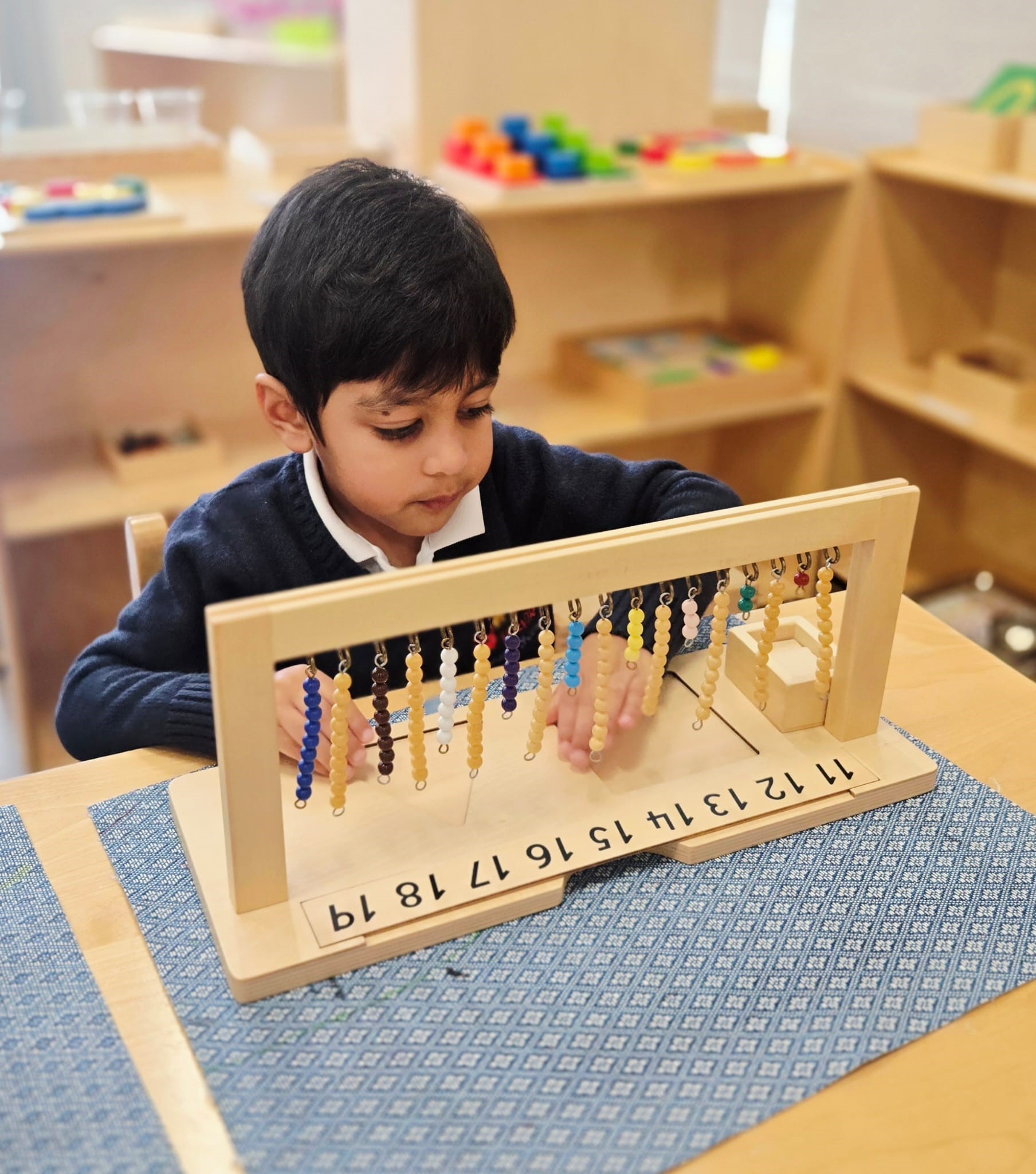
Mathematics begins in the hands. Number rods, spindle boxes, counters and golden beads let children hold quantity before they name it, then link quantity to symbol. Counting, number recognition, sorting, patterning, comparison and early operations all grow from concrete materials, so abstraction arrives with understanding rather than memorisation.
07
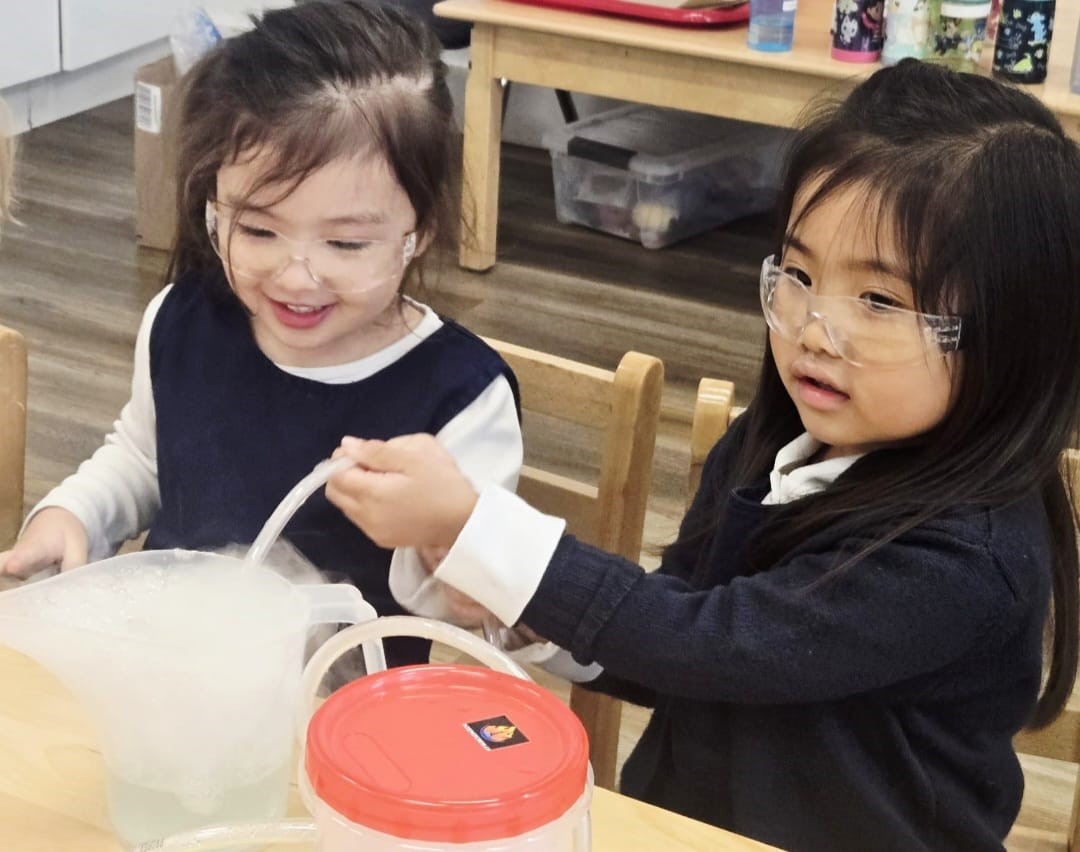
Science and Discovery
Children observe, wonder and test. We explore living and non-living things, seasons and weather, plants and animals, sinking and floating, light and shadow. Simple experiments, nature collections and classroom care of plants encourage careful observation and the patience to watch something change over time.
08
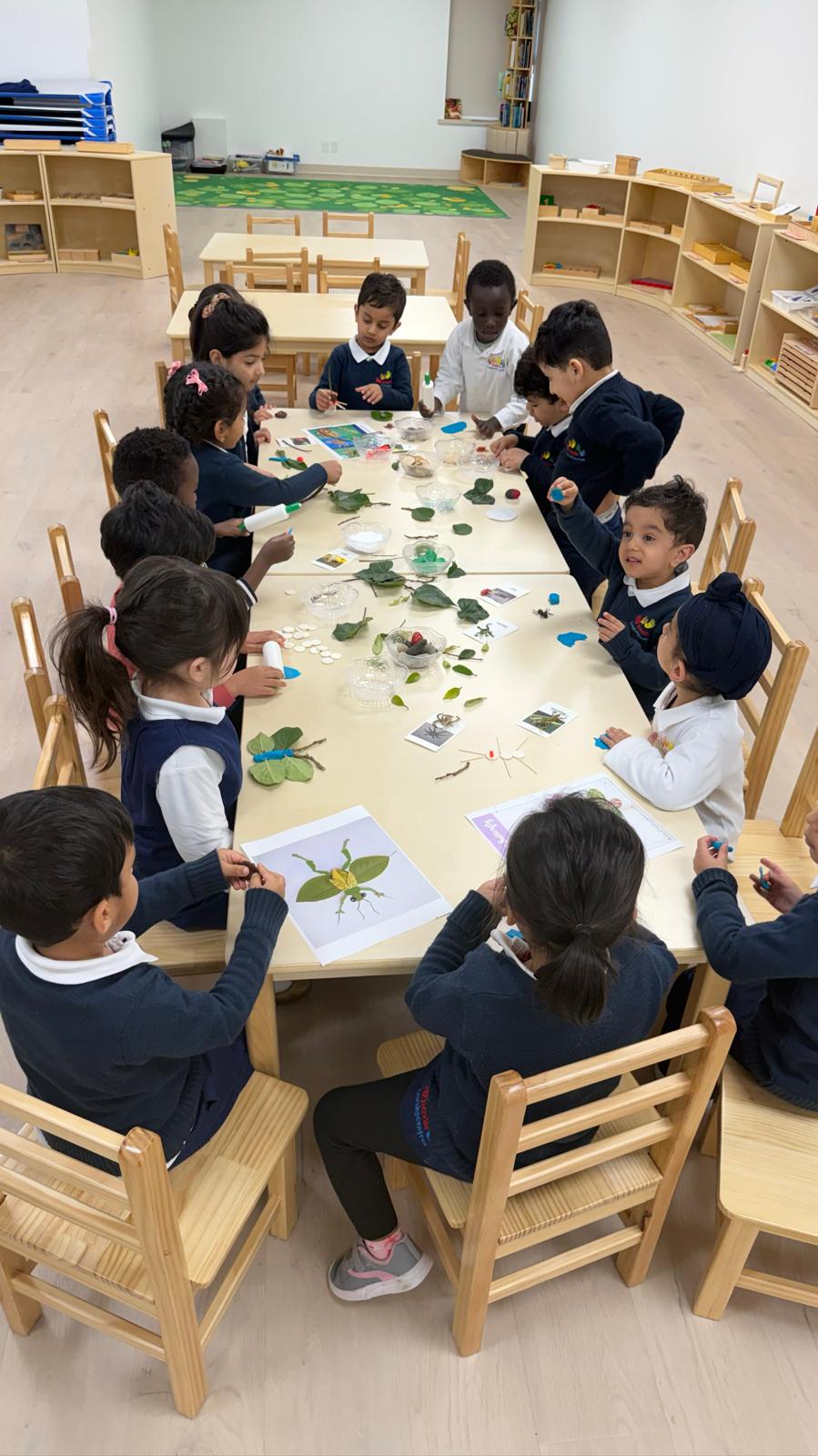
Creative Arts
Painting, drawing, clay, collage, music, singing, movement and dramatic play give children many languages for expressing ideas. Materials are open-ended and the emphasis is always on the process rather than a finished product that matches a model.
10
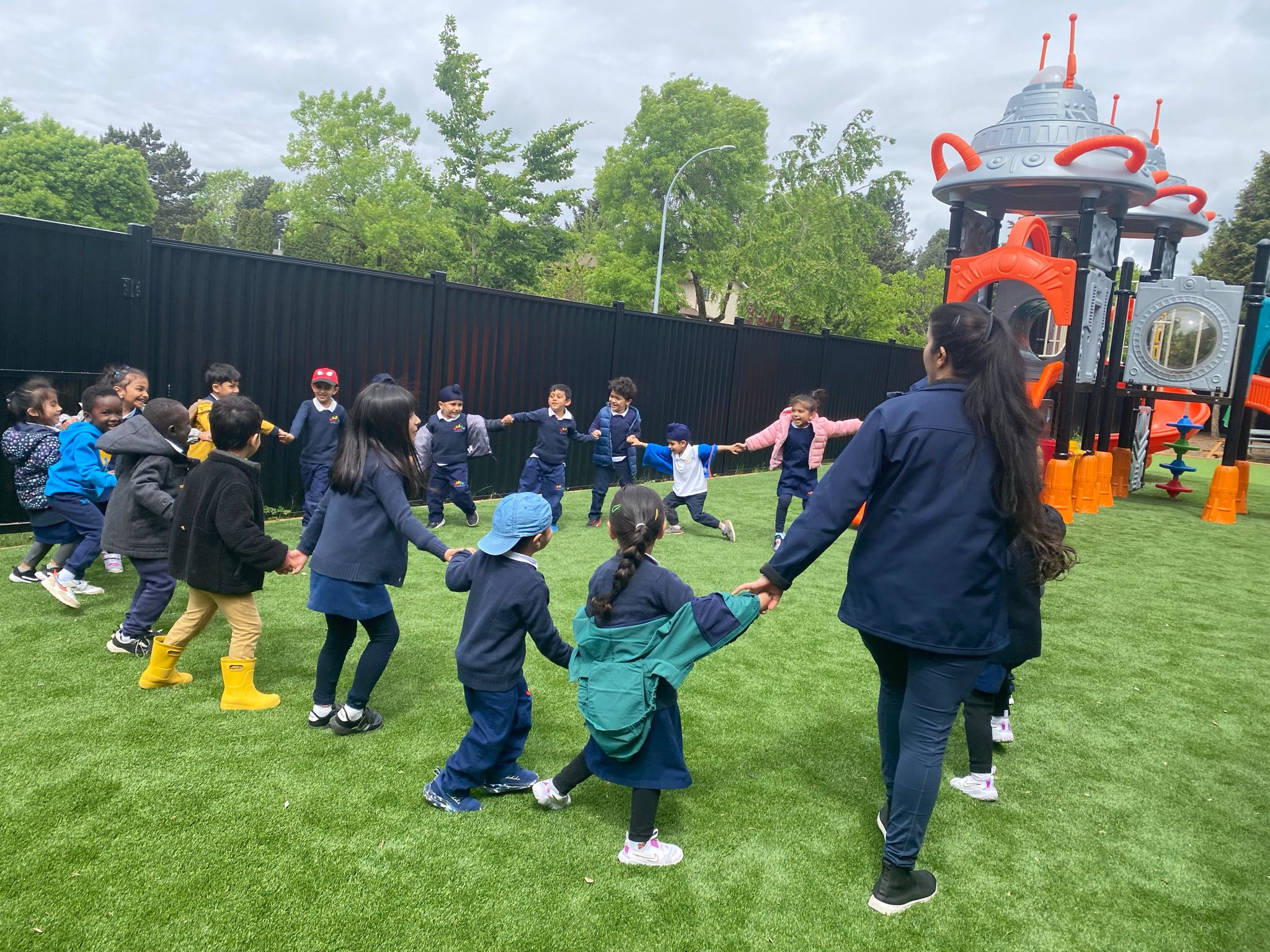
Outdoor Learning
Time outdoors is part of the curriculum, not a break from it. Running, climbing, balancing and digging build gross motor strength and body awareness, while gardening, weather watching and nature walks connect children to the seasons of the Pacific Northwest.
See the curriculum in action
Visit a classroom, or explore our programs to see how these areas take shape at each age.
Book a Tour
09
Social and Emotional Development
Grace and courtesy lessons give children the words to greet, ask, wait, disagree and repair. Educators help children name feelings, take turns, cooperate on shared work and resolve conflicts respectfully. Confidence grows quietly here — from being heard, and from being trusted to try again.